Previously, the junction of the apron and the table top was closed with a flexible plinth from a construction supermarket. Now they do so only in projects of the "supereconomy" level. We explain how exactly to arrange the joint of the tabletop and the apron and what are the advantages of each solution.
- A tiny plinth from a tabletop manufacturer.
The easiest option is to order a plinth made of artificial (or natural) stone at the time of making the tabletop.
What is important to consider: previously, a flexible plinth between the tabletop and the apron was purchased to cover the installation gap. The tabletop was not pushed close to the apron. A plastic plinth of a triangular section with a side of 25-30 mm perfectly hid the gap between the wall and the headset. A modern rectangular plinth (with a cross section of 10 mm) can close only a very neat assembly seam.
It turns out that a stone plinth implies a perfectly aligned wall. And a headset mounted close to it.
- A plinth of medium height acts as an apron
A solution for those who are ready for the European fashion version of an apron without an apron. The bottom - the dirtiest part - is covered from splashes with durable material. And the rest of the wall up to the ceiling is covered with a mud-moisture-proof coating. - An apron as a skirt
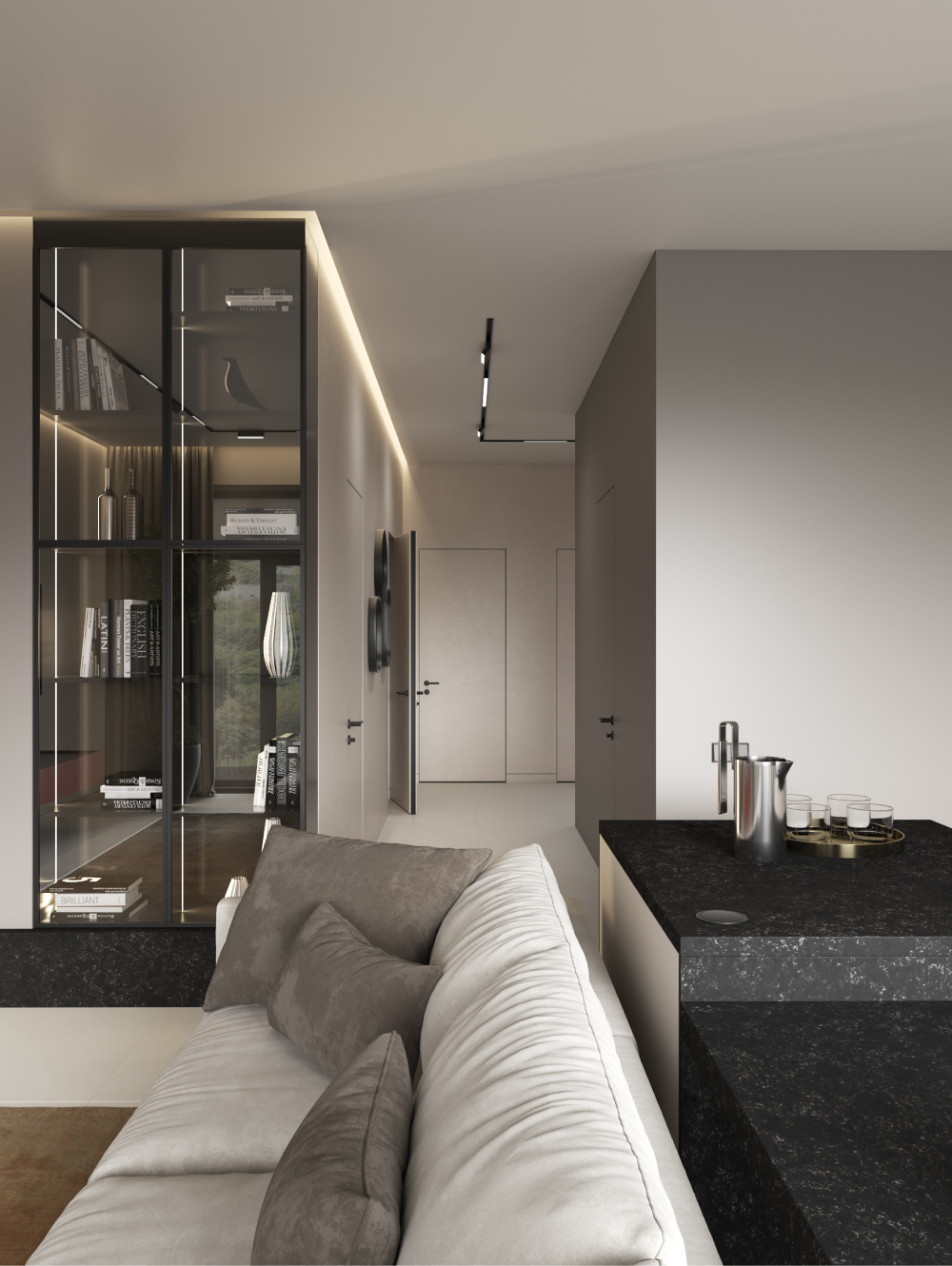
The development of the previous idea is a table without a plinth. An apron, which is made of the same material (artificial or natural stone) as the main countertop, acts as a sideboard. This material has no seams, so there is no need to additionally seal and protect it from moisture. - Epoxy grouting
This joint of the countertop and the apron is recommended for brick sets and tiled countertops. It is recommended to seal the joint of a tile or ceramic apron with a tabletop made of another material with a sealant (more on that later).
What is important to consider: the grouting should not be ordinary (cement), but epoxy. It is more expensive, not every tiler knows how to work with it, but epoxy grout has zero water absorption. That is, fungus does not grow in it, the seams will definitely not turn black-green and unevenly lose color from constant contact with water.
- Countertop sealant
They are used in situations where two fundamentally different materials are connected - porcelain stoneware or tiles on an apron and, for example, a tabletop made of laminated chipboard, solid wood.
What is important to consider: the order of installation changes! First, a kitchen set and a worktop are installed. And only then - the apron tiles are laid. There is practically no connecting seam, and the one that is is treated with a transparent sealant. You can use silicone, sometimes on the forums they advise automotive for glass, such as Sikaflex 555.
Let's draw conclusions
- There are fashionable and unfashionable ways to make a joint between the tabletop and the apron.
- Triangular plinths give way to rectangular plinths. Plastic - artificial and natural stone, metal.
- Many designers refuse plinth altogether. The accuracy of the joint is achieved first of all due to the ideal derivation of the horizontal lines and the correct sequence of installation of the headset.
- Adjoining the tabletop to the apron must be perfect, since the board (unlike the plastic one) is not flexible - it will not be possible to compensate for the original unevenness with its help.
- There is only one way to achieve a perfect fit: first assemble the kitchen, mount the worktop, and only place an apron on top of it.
- If there is no gap between the apron and the headset, you can not use the plinth at all. In this case, the seam is filled with sealant or epoxy grout. You can lay tiles through a metal profile.
- Owners of stone countertops made of artificial or natural material are advised to order the same edge (height varies). The material is glued together and mounted almost without a seam - very hygienic.
- It is wisest to buy a plinth for a wooden tabletop at the same time as ordering a surface. Give preference to a plinth in the form of a bar, do not consider triangular options.